
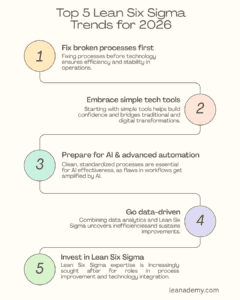
TOP 5 Lean Six Sigma Trends for 2026
Why Process Improvement Comes First
Lean Six Sigma is built on the principle of eliminating waste and reducing variation. These fundamentals ensure that processes are stable, predictable, and capable of delivering consistent results. When organizations skip this step and rush into technology adoption, they risk automating chaos.
Imagine implementing robotic process automation (RPA) on a process riddled with unnecessary steps and bottlenecks. Instead of improving efficiency, you’ve made a bad process run faster. The result? Higher costs, frustrated employees, and disappointed customers.
Key takeaway: Process discipline is the backbone of sustainable transformation. Before investing in technology, organizations must audit and optimize their workflows using Lean Six Sigma tools like value stream mapping, root cause analysis, and FMEA.
The Role of Simple Technology in 2026
Once processes are streamlined, simple technology can deliver quick wins. These tools are designed to complement Lean Six Sigma principles without overwhelming complexity. Examples include:
- Digital dashboards for real-time performance tracking.
- Workflow automation tools that eliminate repetitive manual tasks.
- Data visualization platforms that make trends and anomalies easy to spot.
In 2026, expect these solutions to become more accessible and user-friendly, enabling teams to make data-driven decisions faster. They bridge the gap between traditional process improvement and advanced digital transformation, creating a solid foundation for future innovation.
Advanced Technology and AI – The Future Frontier
Artificial intelligence, machine learning, and predictive analytics are no longer futuristic concepts—they’re here, and they’re transforming industries. For Lean Six Sigma practitioners, these technologies offer exciting possibilities:
- Predictive quality control to anticipate defects before they occur.
- Intelligent process automation that adapts to changing conditions.
- Real-time insights for proactive decision-making.
However, these benefits only materialize when processes are clean and standardized. AI amplifies good processes—but it also magnifies bad ones. Without a strong Lean Six Sigma foundation, advanced technology can lead to costly mistakes and missed opportunities.
How Lean Six Sigma Professionals Can Prepare for 2026
To thrive in this evolving landscape, professionals should:
- Master the fundamentals. Invest in core Lean Six Sigma skills to ensure processes are optimized.
- Adopt technology gradually. Start with simple tools before moving to advanced AI solutions.
- Build a culture of continuous improvement. Technology works best when paired with a mindset that embraces change.
- Collaborate with tech teams. Bridge the gap between process experts and IT professionals for seamless integration.
The future of Lean Six Sigma in 2026 is bright—but only for organizations and professionals who prioritize process improvement before technology adoption. Remember: technology is an enabler, not a substitute for solid processes. By fixing broken workflows first, businesses can unlock the full potential of digital tools and AI, driving sustainable success in the years ahead.
Start preparing now. Audit your processes, eliminate waste, and build a strong foundation. If you’re a professional looking to advance your career, now is the time to invest in Lean Six Sigma training and certification. Strengthening your skills today will position you as a leader in process improvement and digital transformation tomorrow.
👉 Explore our Yellow Belt, Green Belt, and Black Belt courses to learn how to select, scope, and execute high-impact projects.
For more information, please complete our Contact Form.
Follow us on YouTube.
Follow us on LinkedIn.
Follow us on Pinterest.